How to get a ham radio license!
Earning an entry-level FCC radio license isn’t hard. It just takes a little focused study, like your first written driver’s test. See full article in PDF
All the FCC exam questions are known ahead of time. Study tools are based directly on them. Helpful radio amateurs can assist you in preparing and suggest ways to utilize your license as a hobbyist or emergency communications operator.
Ways to prepare for the FCC entry-level license
Exam-specific books, online study tools, podcasts, and lectures are all based directly on this known FCC material. Pick the learning style that is most effective for you.
- “Read the book” Both Fast Track and Gordon West books are on Amazon and feature learning tools.
- Attend a workshop based on the book you read on Zoom or in-person, depending on the instructor.
- Self-study online http://www.hamstudy.org, http://www.qrz.com/hamtest/, Hamradioprep.com mixes videos and mock tests.
- Take the FCC exam via Zoom at https://glaarg.org or in person through your instructor, club, or agency.
- Get active once you pass! Learn by talking on “radio nets.” Put new skills to use by becoming a volunteer.
- Helpful groups like LACDCS, ACS, ARES, and local radio clubs.
Online study options
 If online study works for you, the three self-study sites listed above have been recommended by experienced emcomm practitioners.
Online learning combines video presentations with study-review modules of FCC test information and mock exams. Many students excel using these tools around their busy schedules. The mock exams are a credible gauge of how ready you are to take the actual FCC exam.
Tip: Students can mix and match online tools with traditional book study.
Traditional book study with review workshops
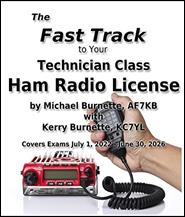 Before 2020, studying one of the exam-specific books shown was followed by attending a live workshop was the typical way to prepare for the entry-level FCC exam. Give the very popular “Gordon West” and “Fast Track” books a look. Each has good reviews and has been adding a mix of online and podcast-type features. They may even tie in with the online study options noted.
 Both books are often paired with 6-8 hours of instructor-led workshop review. We’ve listed some volunteer instructors active with local radio clubs and emergency radio groups like DCS, ACS, and ARES. Instructors typically offer 1-3 sessions a year. Workshop costs may vary but tend to be limited to covering baseline expenses. Additional classes can be found using the ARRL link below.
In-person workshop instructors
The list shows instructors from various parts of LA County. Ask them when their next class will be held, what book they use, and if they offer in-person or online testing.
Walt Ordway, waltfordway@juno.com, is affiliated with the Palos Verdes Amateur Radio Club and the Peninsula Alert Network, PVAN.
Norm Goodkin, hamclass@goodkin.net, is affiliated with multiple emcomm groups, including the LA County Disaster Communications Service (LACDCS). Location NW LA County.
Dennis Swink, dennisps1@msn.com, is affiliated with LACDCS and others. Location NE LA County.
Dan Romanchik, cwgeek@kb6nu.com, is affiliated with ARES LAX. Location NE LA County.
Marty Woll, n6vi@socal.rr.com, is affiliated with ACS/LA City Fire Department and LACDCS.
Mark Chung, mchung@prodigy.net, is affiliated with the American Red Cross.
ARRL Class look-up
 You can also look for classes online at: https://www.arrl.org/find-an-amateur-radio-license-class
Since 1914, the American Radio Relay League, ARRL, has been the non-commercial organization representing amateur radio nationally and offering many educational programs and supporting emergency and hobbyist radio activities.
















 Los Angeles County Disaster Communications Service
Comments are closed.